
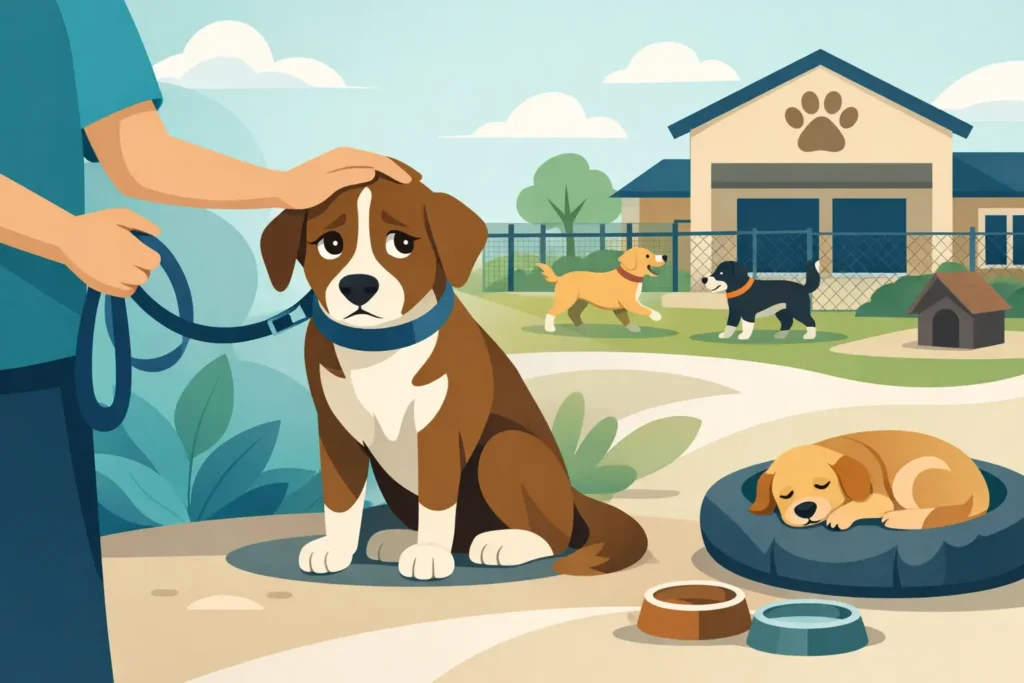

The hard part is not packing the food, the meds, or the leash. It is handing over the lead and wondering how your dog will handle the noise, the strangers, and the change in routine. Dog boarding for anxious dogs is different from standard boarding because stress can build fast when the environment is not structured, staffed, and prepared.
Some dogs pace. Some shut down. Some stop eating, bark nonstop, or react defensively when they feel cornered. That does not make them bad boarding candidates. It means they need a facility that can manage anxiety on purpose, not one that treats it like an inconvenience.
What anxious dogs actually need from boarding
Anxious dogs do not need a kennel that simply says it is caring. They need predictable handling, close observation, and people who know the difference between nervous behavior and a medical or behavioral problem that needs intervention. A nervous dog can go from manageable to overwhelmed quickly if intake is rushed, staff turnover is high, or the environment is chaotic.
The first requirement is supervision. If a dog is stressed at 10 p.m. or 3 a.m., that matters. Anxiety does not keep business hours. Facilities with true around-the-clock staffing have a clear advantage because someone is there to monitor eating, bathroom habits, pacing, vocalization, restlessness, and any signs that the dog is escalating.
The second requirement is structure. Dogs with anxiety usually do better when the day is consistent. Regular feeding, repeatable potty breaks, controlled movement, and calm handling reduce the number of surprises your dog has to process. Some owners assume more stimulation is always better, but for anxious dogs, too much activity or too much social exposure can make boarding harder, not easier.
The third requirement is acceptance of the dog as it is. Many anxious dogs are also medicated, reactive, elderly, recovering from illness, or uncomfortable around unfamiliar dogs. A kennel that only works well for easy dogs is not set up for the dogs who need real management.
Dog boarding for anxious dogs is not one-size-fits-all
There is no single formula that works for every nervous dog. One dog settles best in a quiet kennel run with minimal traffic. Another needs frequent reassurance from staff and careful movement throughout the day. Some benefit from staying away from group play entirely. Others relax once they understand the routine and have safe exposure to activity around them.
This is where many owners get bad advice. They are told their dog just needs to “burn energy” or “get used to it.” Sometimes exercise helps. Sometimes it adds more stimulation to an already overloaded dog. The right approach depends on the dog’s triggers, history, age, health, and threshold for change.
That is why intake matters so much. A serious boarding facility should ask detailed questions about behavior at home, medication schedules, bite history, food guarding, crate tolerance, separation stress, noise sensitivity, and how the dog responds to handling. If the conversation feels shallow, the care plan probably will be too.
What to look for before you book
If your dog has anxiety, you should evaluate a boarding kennel differently than you would for a social, low-maintenance dog. Cleanliness and convenience matter, but they are not enough.
Start with staffing. Ask whether someone is physically on site overnight, not just on call. Ask who gives medications, who monitors dogs after hours, and what happens if your dog refuses food, has diarrhea, or shows escalating stress behaviors. For anxious dogs, delayed response is a real risk.
Then look at handling capability. A kennel should be able to explain how it separates dogs when needed, how it manages dogs that cannot safely join routine turnout with others, and how it handles dogs that are fearful, reactive, or difficult to move. Vague answers are a warning sign.
Medical readiness also matters more than many owners realize. Anxiety can mask medical issues, and medical issues can intensify anxiety. If your dog is senior, medicated, recently ill, or prone to stress-related stomach upset, boarding is safer when trained staff can identify problems early and act quickly.
Finally, pay attention to the facility’s attitude toward difficult dogs. Some places tolerate them. Better places are prepared for them. There is a difference. Marsh Run Kennels has built its reputation around taking dogs other kennels often refuse, including anxious, medicated, and special-needs dogs, and that kind of operational confidence matters when your dog is not an easy fit.
How to prepare your dog without making anxiety worse
Preparation helps, but overcomplicating it can backfire. Your goal is not to create a perfect emotional state before boarding. Your goal is to give the facility accurate information and send your dog with familiar essentials.
Stick to your dog’s normal food. Sudden food changes are one of the fastest ways to create digestive stress, and anxious dogs are already more vulnerable. Bring clear medication instructions, including timing and dosage, and be specific about any patterns you have noticed, such as appetite changes under stress or sensitivity to loud activity.
A familiar blanket or bed can help if the facility allows it, especially for dogs that settle through scent. For some dogs, a personal item is comforting. For heavy chewers or destructive dogs, it may not be safe. This is one of those it-depends decisions that should be made honestly, not hopefully.
Your own behavior matters too. Long, emotional goodbyes can raise tension. Dogs read hesitation well. A calm handoff is usually better than a dramatic one. The most helpful mindset is simple: choose the right kennel, communicate clearly, and let the staff do their job.
Common mistakes owners make with anxious boarding dogs
One common mistake is choosing based on price alone. Anxiety-focused boarding often requires more staff attention, more individualized management, and more skill. If your dog needs medication, careful separation, extra monitoring, or controlled handling, bargain shopping can become expensive in the worst way.
Another mistake is minimizing behavior during intake. Owners sometimes worry their dog will be turned away if they admit the dog growls when startled, panics in crates, or snaps during nail trims. Hiding that information does not protect your dog. It removes the staff’s ability to plan safely.
A third mistake is assuming all anxious dogs should be pushed into social settings. Some do fine in daycare-style environments. Others are safer and calmer with individualized turnout and low-pressure routines. More interaction is not always better interaction.
When boarding can actually help
For some dogs, a well-run kennel becomes easier with repetition. The first stay may be tense. The second may be noticeably better. Once an anxious dog learns the sounds, routine, and handlers, boarding can become more predictable and less threatening.
That only happens when the experience is managed correctly from the start. If a dog’s first boarding stay is chaotic, under-supervised, or physically stressful, the next stay often gets harder. If the first stay is controlled and responsive, many dogs build tolerance and confidence over time.
This is especially true for families with demanding schedules. Working professionals, military households, first responders, and frequent travelers often do not have the option to avoid boarding altogether. What they need is a facility that does not flinch when the dog has special needs and does not disappear after drop-off.
The standard should be higher for anxious dogs
Anxious dogs require more than kindness. They require systems. They require supervision that continues through the night, staff who can read behavior accurately, and a facility willing to adapt the plan to the dog instead of forcing the dog into a generic routine.
If a kennel makes you feel like your dog’s anxiety is too much trouble, keep looking. The right boarding environment should leave you with answers, not doubts. When the care is structured, capable, and consistent, anxious dogs have a much better chance to settle – and you have a much better chance of leaving town without second-guessing every mile.

